Develop & test tech inspired solutions.
We’ll test future tech-inspired solutions, developing vehicles for venture acceleration while building homegrown talent.
Our innovation arm GDI Hub Accelerate will offer a safe space for start-ups to rapidly explore new concepts. Developing capacity in country to deliver AT accelerators and ecosystem interventions, we’ll support AT ventures through early-stage pathways, while developing knowledge outputs, innovation insights and papers.
Our new innovation fellowship programme will incubate talent through grants, developing an interdisciplinary global forum and seed funding – alongside a six-month virtual accelerator programme. Building mechanisms for support, in-person training will be delivered alongside ecosystem alignment to provide channels for finance and partnership and bridges to other research, innovation, and entrepreneurship programmes.
Sub-Programmes
- GDI Accelerate: GDI Accelerate (GDIA) acts as a support engine, enabling the translation of innovation into practice: supporting Innovation Sprints and Accelerators.
- Royal Academy of Engineering Fellowship Programme: The Royal Acadmy of Engineering Fellowship (RAEng) is a cornerstone of AT2030’s incubate strategy, designed to support innovators at Technology Readiness Level (TRL) 7 and above. It complements the GDI Accelerate workstreams by ensuring a continuous pipeline from ideation to deployment and adoption.
Latest
-
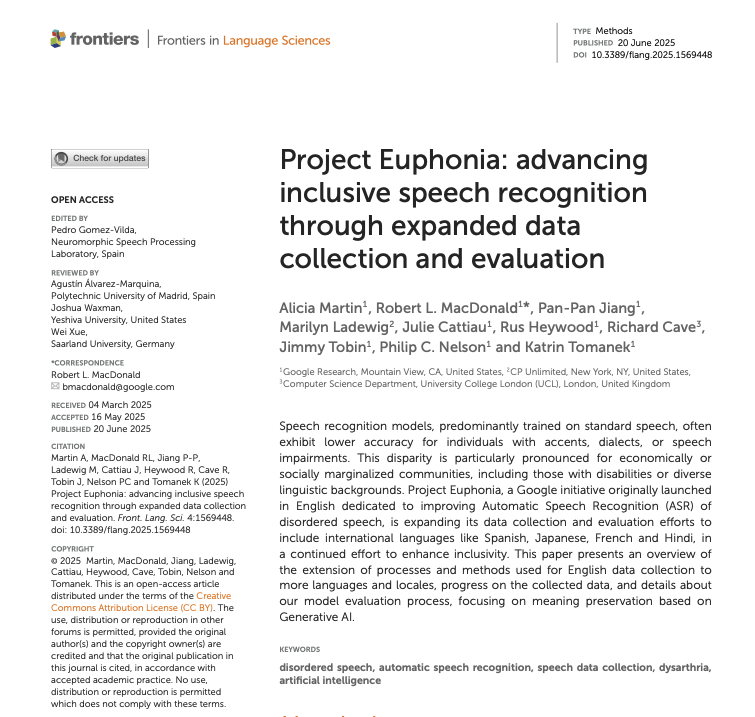
Project Euphonia: advancing inclusive speech recognition through expanded data collection and evaluation
Centre for Digital Language InclusionJune 20, 2026GlobalAcademic Research PublicationsSpeech recognition models, predominantly trained on standard speech, often exhibit lower accuracy for individuals with accents, dialects, or speech impairments. This disparity is particularly pronounced for economically or socially marginalized communities, including those with disabilities or diverse linguistic backgrounds. Project Euphonia, a Google initiative originally launched in English dedicated to improving Automatic Speech Recognition (ASR) of disordered speech, is expanding its data collection and evaluation efforts to include international languages like Spanish, Japanese, French and Hindi, in a continued effort to enhance inclusivity. This paper presents an overview of the extension of processes and methods used for English data collection to more languages and locales, progress on the collected data, and details about our model evaluation process, focusing on meaning preservation based on Generative AI.
-
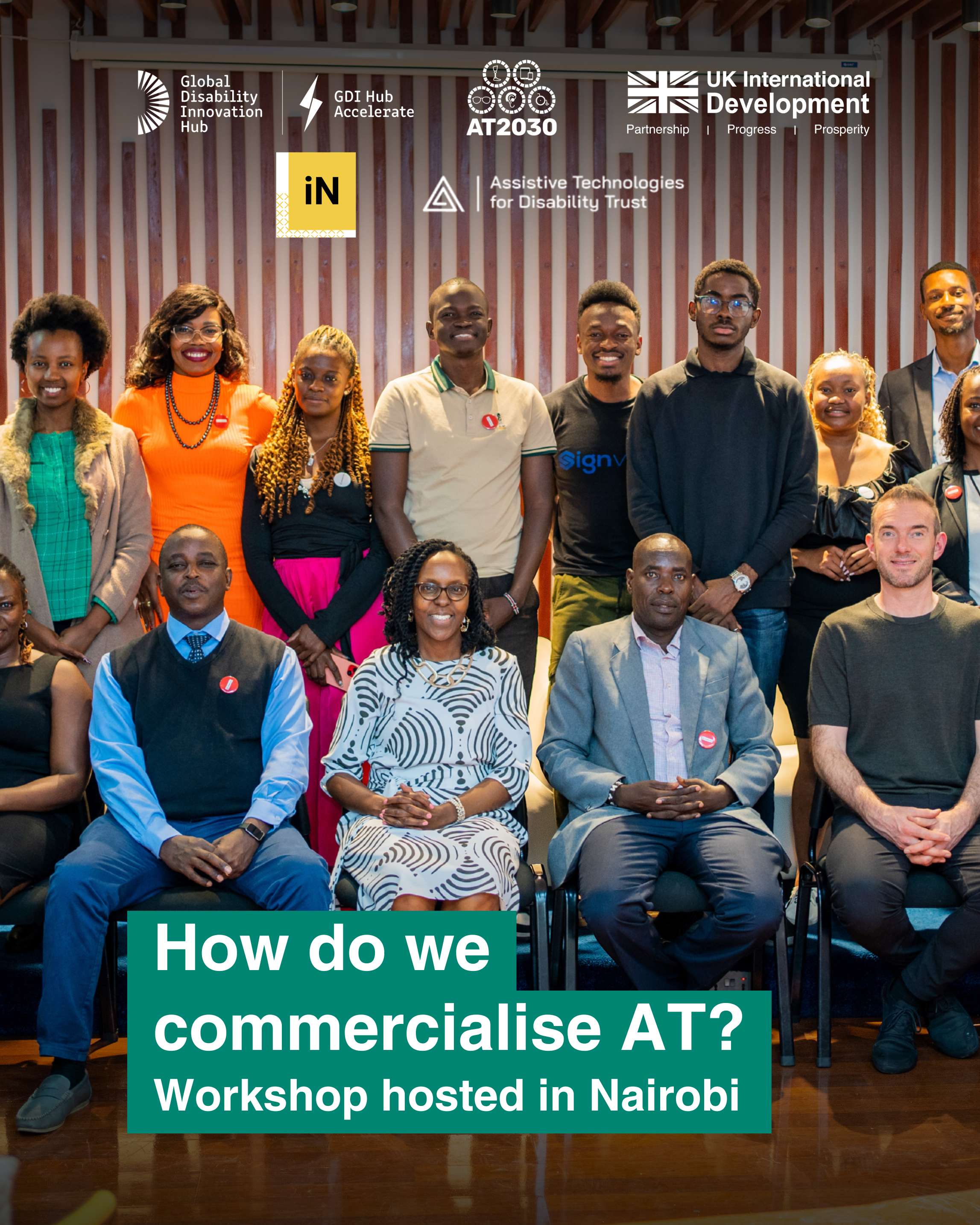
Bringing assistive technology to market in Kenya
Harrison KamauApril 28, 2026KenyaCase Studies and ReportsOn 14 April 2026, GDIHub convened an AT Commercialisation Workshop at Senses Hub in Kenya. The goal was blunt: to map the four systems that determine whether an assistive technology product ever reaches people living with speech impairments and the broader disability community or stalls somewhere between customs and a tender committee.
-
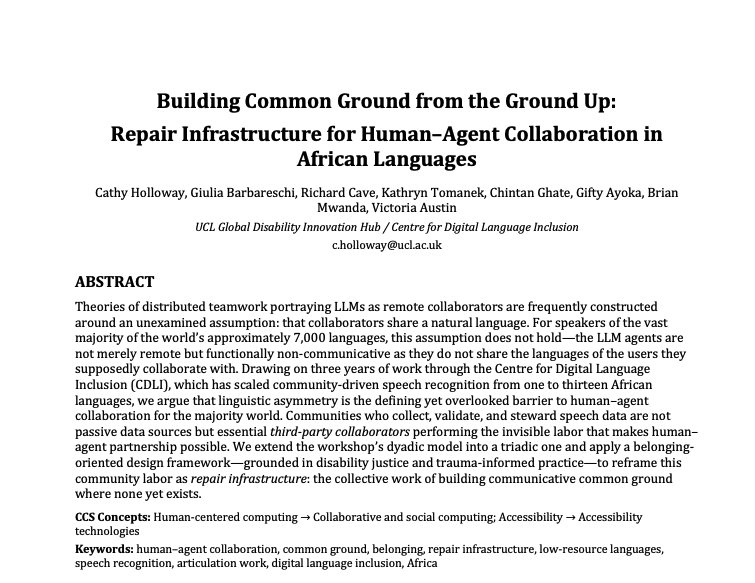
Building Common Ground from the Ground Up: Repair Infrastructure for Human–Agent Collaboration in African Languages
Gifty Ayoka, Vicki Austin, Catherine Holloway, Dr Giulia Barbareschi, Katrin Angerbauer, Richard CaveApril 13, 2026Academic Research PublicationsTheories of distributed teamwork portraying LLMs as remote collaborators are frequently constructed around an unexamined assumption: that collaborators share a natural language. For speakers of the vast majority of the world’s approximately 7,000 languages, this assumption does not hold—the LLM agents are not merely remote but functionally non-communicative as they do not share the languages of the users they supposedly collaborate with. Drawing on three years of work through the Centre for Digital Language Inclusion (CDLI), which has scaled community-driven speech recognition from one to thirteen African languages, we argue that linguistic asymmetry is the defining yet overlooked barrier to human–agent collaboration for the majority world.
-
What We Learned Running Inclusive AI Innovation Sprints in Africa (And What We’d Do Differently Next Time)
Global Disability Innovation HubMarch 31, 2026Kenya, Ghana, UgandaCase Studies and ReportsOver the past year, we’ve been running a series of innovation sprints focused on inclusive AI for speech technologies in Africa — first in Ghana, then in Kenya, and now beginning in Uganda. The goal was simple to state, but harder to achieve: to support local innovators to build meaningful solutions for people living with speech impairments, using AI and speech technologies that actually reflect local languages, contexts, and lived realities. What we learned along the way wasn’t just about models, datasets, or apps. It was about how innovation actually unfolds when you put real people, real constraints, and real expectations into the room.
-
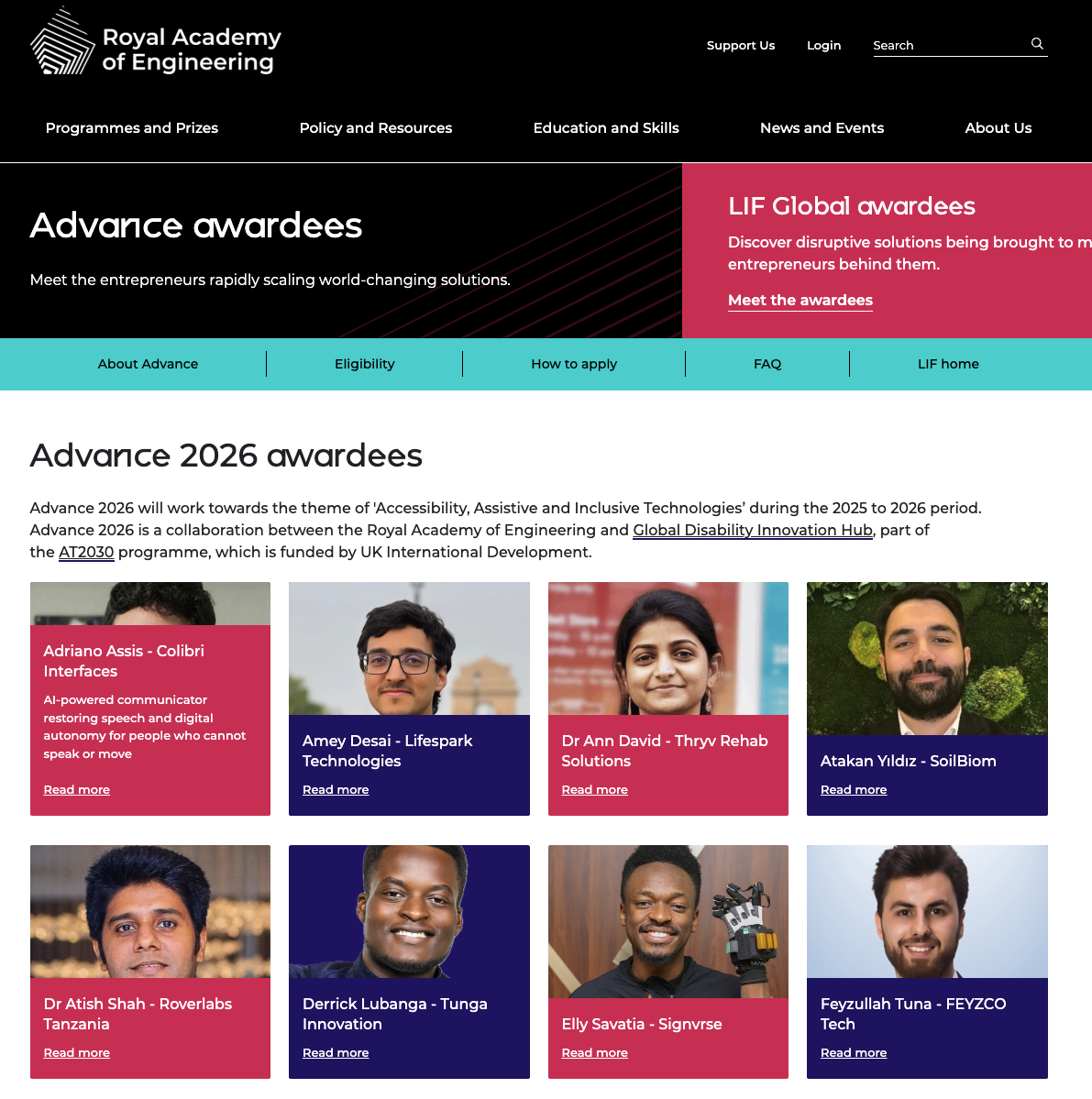
2026 Advance awardees
Royal Academy of EngineeringMarch 31, 2026GlobalCase Studies and ReportsAdvance 2026 will work towards the theme of 'Accessibility, Assistive and Inclusive Technologies’ during the 2025 to 2026 period. Advance 2026 is a collaboration between the Royal Academy of Engineering and Global Disability Innovation Hub, part of the AT2030 programme, which is funded by UK International Development.