Highlights
All Impact Stories
-
Inclusive Climate Infrastructure Design recording
Global Disability Innovation HubSept. 28, 2026GlobalThe Inclusive Climate Infrastructure Design Playbook provides a foundation for continued discussion and collaboration on how we can shape urban environments that are both resilient to climate change and inclusive of people with disabilities.
-
Pathways to Funding: The Welfare Society for the Disabled – Sierra Leone (WESOFOD-SL)
Global Disability Innovation Hub, The Welfare Society for the DisabledJune 29, 2026Sierra LeoneCase Studies and ReportsWelfare Society for the Disabled Sierra Leone (WESOFODSL) are working with GDI Hub and partner Organisations of Persons with Disabilities (OPDs) to identify where funding systems prevent OPDs from participating and how those barriers can be removed so OPDs can play a central role in shaping legislation, policies and decisions affecting persons with disabilities. As part of this work, WESOFODSL held a workshop with 18 OPD leaders and created a video encouraging funder, government and OPD use of key reports and guidance to improve access to funding for OPDs in Sierra Leone.
-
Coast Cerebral Palsy Foundation in Mombasa
Kilimanjaro Blind TrustJune 23, 2026KenyaCase Studies and ReportsAs part of post-training follow-up, KBTA documented the experience of Teresia Wamboi, Chairperson of the Coast Cerebral Palsy Foundation, to understand how knowledge gained through the OPD strengthening and Assistive Technology training sessions has been applied within her community.
-
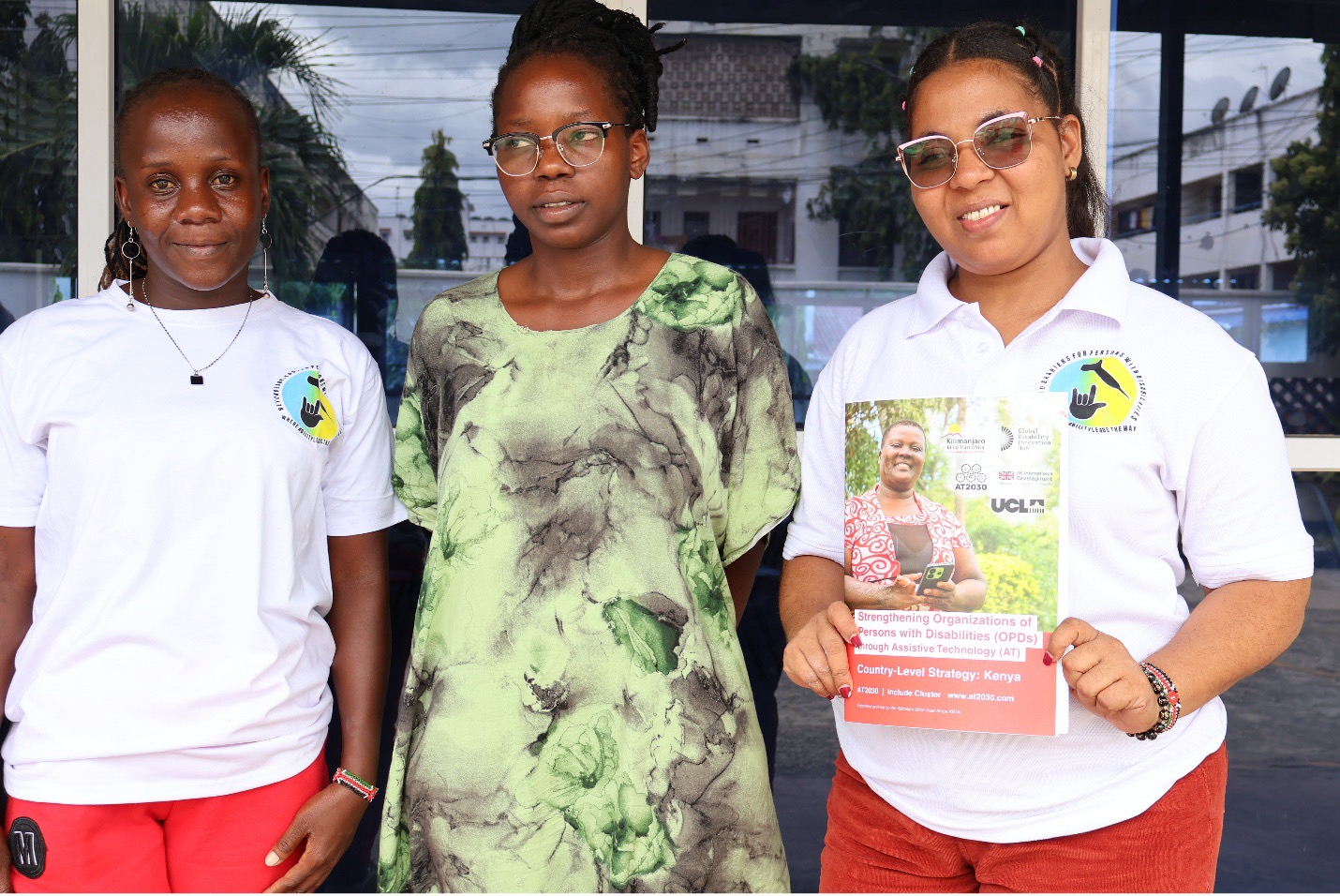
Youth-Led OPD Innovation and Economic Empowerment Through Digital Inclusion
Kilimanjaro Blind TrustJune 23, 2026KenyaCase Studies and ReportsThis experience highlights how youth-led OPDs, when equipped with digital skills and Assistive Technology, can move beyond advocacy to become effective drivers of innovation, resource mobilisation, and economic empowerment for persons with disabilities
-
Elizabeth Wangari founder of Gikazi Self Help Group in Nairobi
Kilimanjaro Blind TrustMay 8, 2026Here is Elizabeth Wangare is the founder of Gikazi Self Help Group in Nairobi, a community initiative supporting mothers of children with disabilities. As an OPD leader, she champions caregiver support, inclusion, and advocacy for children living with disabilities and their families.
-
Sheila Mogalo
Global Disability Innovation HubMarch 31, 2026GlobalCase Studies and ReportsPara Sport Against Stigma (PSAS) is a research and innovation project exploring how Para and disability sport can be used to understand and shift disability stigma. Part of the FCDO-funded AT2030 programme, the project began by examining how Paralympic broadcasting could influence public perceptions across Sub-Saharan Africa in collaboration with the International Paralympic Committee.
-
Dr Jessica Noske-Turner
Global Disability Innovation HubMarch 31, 2026GlobalCase Studies and ReportsDr Jessica Noske-Turner is the Para Sport Against Stigma project’s lead researcher and contributes internationally to the field of Communication for Social Change. She has guided the project’s participatory research methods across Malawi and Region 5 and works closely with partners to shape policy, practice and systems-level reflection. Her work positions communication as a critical driver of social transformation.
-
Sharing insights from the Para Sport Against Stigma programme
Jennie Wong, Sheila Mogalo (IPC Consultant), Jessica Noske-TurnerMarch 31, 2026MalawiCase Studies and ReportsPara Sport Against Stigma (PSAS) is a research and innovation project exploring how Para and disability sport can be used to understand and shift disability stigma. Part of the FCDO-funded AT2030 programme, the project began by examining how Paralympic broadcasting could influence public perceptions across Sub-Saharan Africa in collaboration with the International Paralympic Committee. Over time, the work has evolved. Today, PSAS focuses on how sport, storytelling, and assistive technology (AT) can contribute to longer-term systems change. We work in reflective cycles with national partners—co-developing activities, learning together, and shaping inclusive policies and practices from the ground up.
-
George Kangaya
Global Disability Innovation HubMarch 31, 2026GlobalCase Studies and ReportsGeorge Kangaya research examined Malawi’s assistive technology ecosystem — mapping providers, barriers, repair pathways, financing, and user experiences. His findings intersect strongly with Paralympic and community sport systems and his work highlights the structural shifts needed to improve access and long-term use of AT in Malaw
-
Jessie Akambadi
Global Disability Innovation HubMarch 31, 2026GlobalJessie Akambadi worked on the project’s initial broadcast localisation research in 2021, exploring how Para sport storytelling is understood, adapted and embedded in Malawian communities. She supported community screenings, theatre-for-development activities and youth engagement. Jessie is now pursuing a PhD at Loughborough University London focused on communication, culture and inclusive narratives.
-
Jennie Wong
Global Disability Innovation HubMarch 31, 2026GlobalCase Studies and ReportsJennie Wong has brought together the Para Sport Against Stigma project — from research to broadcast, campaigns, community engagement and regional partnerships. Coordinating with collaborators across Malawi, Kenya, Namibia, the UK and international federations to open pathways for future work in storytelling, AT innovation and systems change.
-
Talking Tipps Foundation
Dr Ellie ColeMarch 31, 2026GhanaTalking Tipps started as an autism advocacy organisation because my son was diagnosed with autism at the age of three. We faced a lot of challenges and barriers trying to access education, trying to access the health system, and then generally trying to just let my child be a normal child. I didn't want other families to go through the same barriers that I faced. I decided to start an organisation to do advocacy because many people did not understand what disability is in general and what autism was.
-
James Chiutsi
Global Disability Innovation HubMarch 31, 2026MalawiCase Studies and ReportsJames Chiutsi is a leading voice in disability sport in Southern Africa and has been central to the AT2030 Para Sport Against Stigma project since its launch in 2021. As President of the Malawi Paralympic Committee and Chair of AUSC Region 5’s Sport for People with Disability Committee, he has shaped strategy, governance, and regional collaboration. James brings a long-view perspective on systems change across the continent.
-
From Airwaves to Athletics, Samuel Gremu’s Journey into Para Sport
Loughborough UniversityMarch 30, 2026MalawiCase Studies and ReportsIn October 2025, sports journalists from across Malawi gathered in Blantyre to reflect on how disability sport is covered in the country, and the role storytelling can play in shaping both perception and participation. The knowledge exchange workshop brought together journalists and Para athletes to share experiences from both sides of the story from those telling it, and those living it. Samuel Gremu’s journey offers a powerful example of how these narratives can translate into real-world change.
-
Juliet Ruwa National Council for Persons with Disabilities in supporting Organizations of Persons with Disabilities
Kilimanjaro Blind TrustMarch 30, 2026KenyaJuliet shares the mandate and role of the county government in supporting OPD leaders, highlighting how government structures and community-based services work together to respond to the needs of persons with disabilities and promote inclusion at the grassroots level.
-
Tonny Apollo is the Programs Officer at Disability Rights Trust in Nairobi
Kilimanjaro Blind TrustMarch 27, 2026KenyaCase Studies and ReportsTonny Apollo is the Programs Officer at Disability Rights Trust in Nairobi, where he works to strengthen disability inclusion and support initiatives led by Organizations of Persons with Disabilities (OPDs). Through his work, he has actively participated in OPD capacity strengthening trainings focused on leadership, advocacy, and organizational development. Tonny reflects on his experience in the training sessions and shares key learnings that have helped improve leadership, service delivery, and community engagement for the persons with disabilities they support.
-
Hudson Karume Executive Director of Vision for the Blind in Mombasa
Kilimanjaro Blind TrustMarch 27, 2026KenyaCase Studies and ReportsHudson Karume is a visually impaired disability rights advocate and the Executive Director of Vision for the Blind in Mombasa, Kenya. With a strong passion for policy advocacy and inclusion, he works to advance the rights and opportunities of persons with disabilities through meaningful disability mainstreaming initiatives. As an OPD leader, Hudson is committed to creating sustainable impact in livelihoods and economic empowerment for persons with disabilities, while championing inclusive policies that promote dignity, participation, and equal access in society. OPDs in Kenya are transitioning from informal, manual systems to more structured, technology-enabled operations. However, this shift remains fragmented. Persistent challenges include weak documentation systems, limited institutional accountability, inconsistent funding, and gaps in translating legal frameworks into practice.
-
AT2030 Venture Spotlight Series featuring Dot glasses
Global Disability Innovation HubMarch 26, 2026KenyaCase Studies and ReportsThis AT2030 Spotlight Series profiles growth-stage assistive technology businesses developing practical technologies and business models to meet unmet access needs at scale. Each case study explores the problem they are addressing, the model they are building, the evidence behind their work, and how AT2030, GDI Hub and GDI Accelerate are supporting their growth trajectory This publication features Dot glasses
-
Implementing the Latter Day Saints Charities AT Inventory Tool in Sierra Leone
Clinton Health Access InitiativeMarch 26, 2026Sierra LEoneThis practical resource has been developed to support implementing the Latter Day Saints Charities AT Inventory Tool in Sierra Leone.
-
AT2030 higlight video
Global Disability Innovation HubMarch 23, 2026GlobalWatch our co-founders explain how AT2030 began and what drives the GDI Hub's mission.
Next Page
Impact Stories & Community Collaboration
Storytelling can be a great tool to amplify the voices of disabled people and have their voices heard. Building on our previous work, this project explores ways for creative expressions of disabled people’s lived experiences through multi-sensory impactful storytelling.
Storytelling is the oldest form of knowledge sharing and learning that transcends geographies, cultures, and generations. In African and indigenous cultures, the storytelling tradition sustains communities, validates the experiences of indigenous people and nurtures inter-generational relationships and knowledge sharing. Telling stories also helps regain a sense of belonging, collective identity, and connection to the land.
Storytelling can be a great tool to amplify the voices of disabled people and have their voices heard. Building on our previous work, this project explores ways for creative expressions of disabled people’s lived experiences through multi-sensory storytelling. Sharing experiences and stories this way is the first step towards helping individuals develop a voice and skills to advocate for their rights and access to AT. We also explore ways to use technology to amplify these stories to create a positive impact on disability inclusion and improved AT provisions across LMICs.
Research
Social Media as Disability Self-advocacy Tool
This project explores the role of social media as a self-advocacy tool for disabled people. Using a mixed-methods human-centred approach, this project will generate in-depth insight into how disabled people use social media for advocate for disability rights, the barriers and facilitators that impact socia media use, and a toolkit to better serve disability storytelling through social media.
Activities
14 March 2023: AT Storytelling Workshop with International Disability Alliance, Geneva, Switzerland
Outputs
- Maryam Bandukda, Catherine Holloway, Diane Bell, Victoria Austin, "Challenges to disabled people’s participation in digital activism: A global south perspective", CHI 2023 Workshop: Supporting Social Movements through HCI and Design Research, https://sites.google.com/view/hcisocialmovements
- Maryam Bandukda, Catherine Holloway, "Bridging the disability divide in the global south through digital disability inclusion", CHI 2023 Workshop: HCI Across Borders: Towards Global Solidarity, https://hcixb.org/
People