Frontiers projects reconvene in Nepal to ask what works
A year after the AT2030 Frontiers symposium in Kathmandu, the ten teams it seeded are back in Nepal. This time they come with lessons from the field, and with policymakers, funders and practitioners in the room to ask what it will take to make the work last.
In October 2025, engineers, clinicians, researchers, entrepreneurs and advocates from more than fifteen countries met in Kathmandu for the AT2030 Frontiers symposium, a collaboration between the Royal Academy of Engineering and UCL's Global Disability Innovation Hub (GDI Hub). Co-chaired by Professor Pramod Shrestha of Tribhuvan University and Professor Nerrolyn Ramstrand of Jönköping University, the symposium was organised around one question, the same one that sits behind the whole AT2030 programme: what works to improve access to assistive technology for the people who need it around the world?
Participants were invited to turn the conversations of those three days into projects, and in December 2025 ten teams were awarded almost £200,000 in seed funding between them. On 2 and 3 November 2026, those teams are together again in Nepal to share what they have built, what has worked, and what has not.
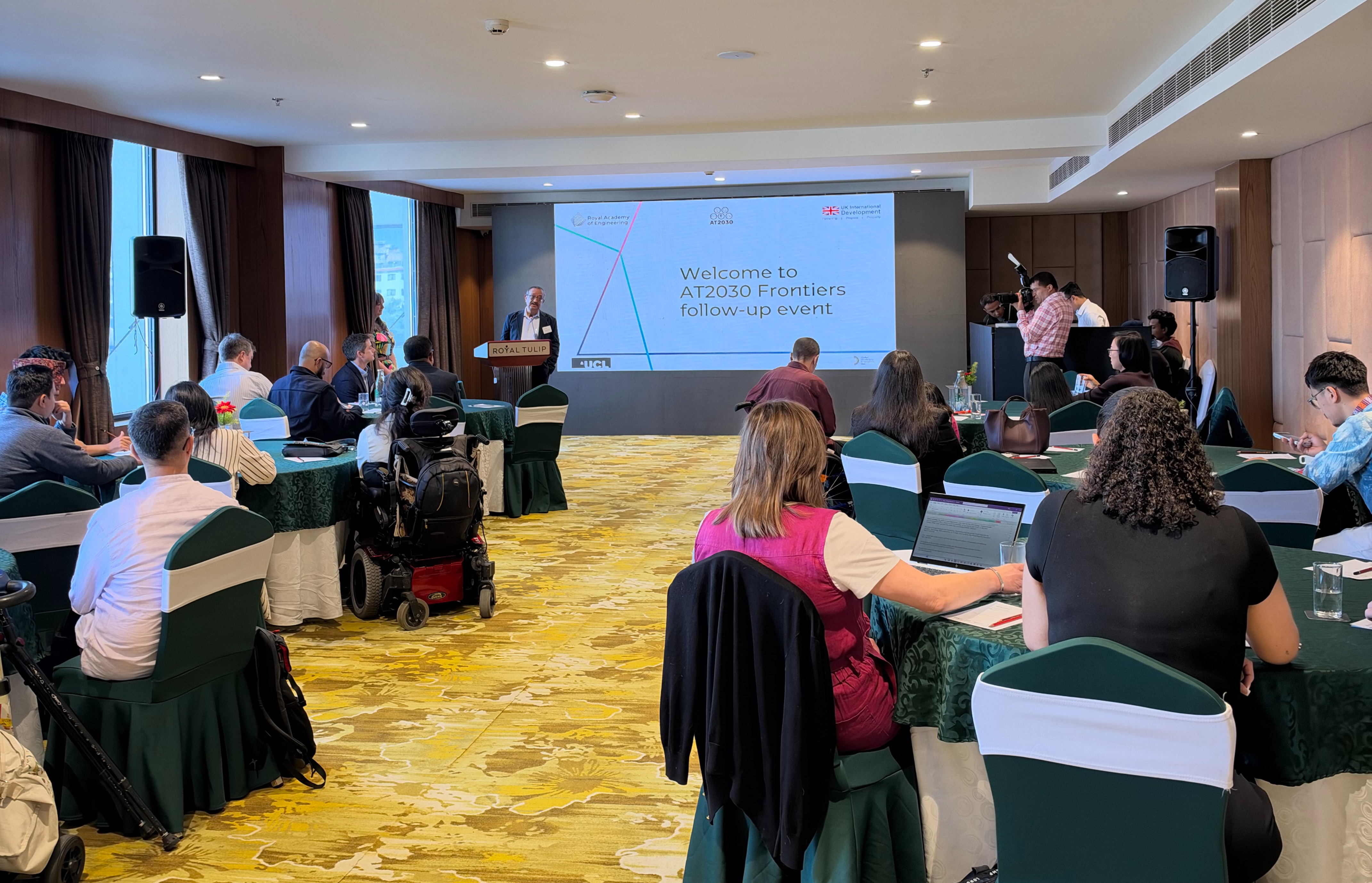
This year, during this two-day event, it will provide an opportunity for reflection, learning and connection within the Frontiers community and the wider assistive technology (AT) ecosystem. Bringing together teams leading Frontiers seed-funded projects, alongside policymakers, researchers, practitioners, funders and development partners, it will explore project achievements, strengthen partnerships, and identify pathways towards sustainable impact and scale.
Day one, on 2 November, belongs to the awardees. Led by the Royal Academy of Engineering team, it gives the ten project teams space to share progress, reflect honestly on the realities of implementation, and identify the challenges, lessons and opportunities they have in common.
Day two, on 3 November, widens the circle. Led by the GDI Hub team, it brings in policymakers, practitioners, researchers, funders and innovation partners to build on the themes emerging from day one. The focus shifts to the harder questions: how assistive technology ecosystems develop, what pathways exist to scale, and what it will take to strengthen access in Nepal and beyond.
AT2030 is led by UCL's Global Disability Innovation Hub and funded by UK International Development. Frontiers is the Royal Academy of Engineering's international programme connecting researchers and innovators to tackle global challenges