Search Our Whole site:
Just Search: Ethiopia
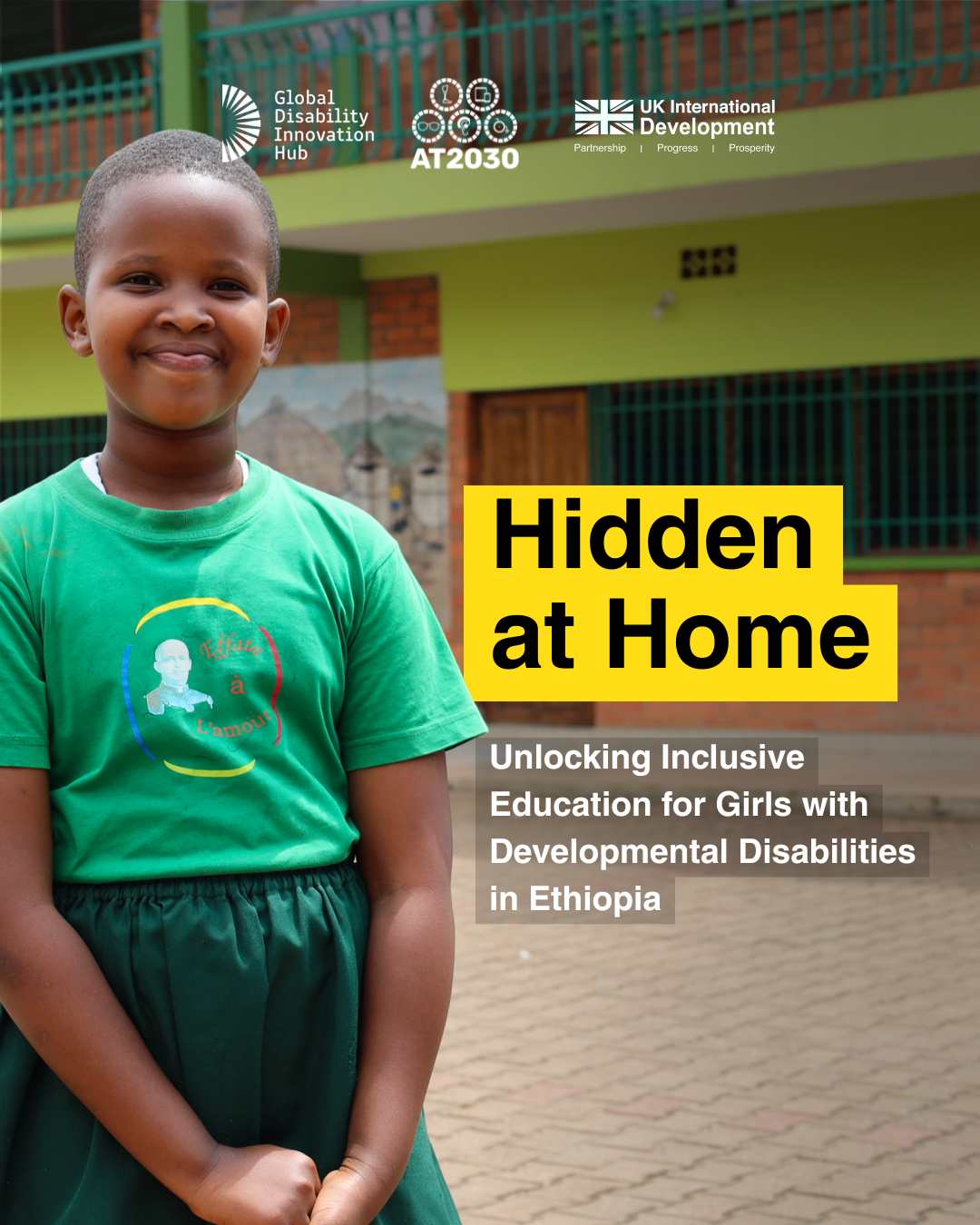
Hidden At Home: Can we Unlock Inclusive Education for Girls with Developmental Disabilities in Ethiopia
Ethiopia has made strides in expanding access to girls’ education through national commitments to Education for All (EFA) and the Sustainable Development Goals (SDG4). However, access gaps for children with disabilities remain, as the Ethiopia’s Ministry of Education (MOE) estimated that only 11% of children with disabilities were enrolled in primary education (ESDP, 2021). While this figure refers broadly to children with disabilities, the challenges are particularly acute for girls with disabilities. Global evidence shows that “girls with disabilities are more likely to be out of school than both boys with disabilities and girls without disabilities. They are the most excluded group of learners due to multiple and intersecting forms of discrimination” (UNGEI, 2021).
National Rehabilitation and Assistive Technology Services Management Guideline - Ethiopia
Medical Rehabilitation Centers (MRC) leadership, management and governance arrangements are essential to ensure effective, efficient and comprehensive rehabilitation services that contribute to the health and wellbeing of the target population. Leadership of MRC should manage their organizations and liaise with external agencies and community. There are five core functions of MRC’s leadership:

IncluCity: Inclusive Cities Pilot to be launched in Addis Ababa
The Inclusive Design team at the GDI HUB is preparing to launch the first Inclusive City Pilot in Addis Ababa, Ethiopia, in collaboration with the UK Foreign, Commonwealth & Development Office (FCDO) and the RICH initiative by the Global Disability Fund. The pilot will build on our Global Action Report, which is the result of four years of research across six cities on three continents. It will test the implementation of the research findings and adapt the global learnings to local contexts.
Inclusive and Resilient Addis Ababa – A Vision in the Making
The Global Disability Innovation Hub (GDI Hub) under the UK International Development-funded AT2030 programme and the Global Disability Fund’s (GDF) Resilient and Inclusive Cities Hub (RICH) has kicked off an inclusive city pilot in Addis Ababa, Ethiopia. Building on GDI Hub’s multi-year research in six cities globally on inclusive infrastructure, this two-year pilot project will further validate the gaps highlighted by ‘Inclusive Infrastructure and Cities: A Global Comparison Report’ and test recommendations from the ‘Delivering Inclusive Design in Cities: A Global Action Report’. This blog outlines an overview of Addis Ababa’s context, how we are building local engagement, and the way forward in understanding what shapes inclusive cities.
Final Report: Assistive Technology Country Capacity Assessment in seven African Countries using WHO Assistive Technology Assessment-Capacity Tool
Draft prepared by Clinton Health Access Initiative (CHAI)
Learnings from the Implementation: Assistive Technology Country Capacity Assessment using WHO Assistive Technology Assessment-Capacity Tool
This draft was prepared by the Clinton Health Access Initiative (CHAI)
Lessons learned from assistive technology country capacity assessments 2019/2020
The purpose of the CCAs is to “capture a high-level understanding of the often-fragmented AT sector in a country or region,” helping raise awareness about AT gaps and opportunities and contributing to advocacy and policy and program development. One year after the first CCAs began, GDI Hub commissioned research into lessons learned so far and recommendations for how the tool and process might be improved in the future.
Addis Ababa at World Urban Forum 13
For the Global Disability Innovation Hub (GDI Hub), participation in the WUF is important for sharing our work and learning from others about inclusive cities. Considering our ongoing Inclusive City Pilot Project in Addis Ababa, this year we invited and supported the participation of Abayneh Gujo, Executive Director of the Federation of Ethiopian Associations of Persons with Disabilities, and Mahmoud Kedir Reshid, Persons with Disabilities Social Rehabilitation Senior Expert at the Ministry of Women and Social Affairs of Ethiopia, to accompany the GDI Hub delegation at World Urban Forum 13 in Baku, Azerbaijan.