Publications
-
Value beyond function: analyzing the perception of wheelchair innovations in Kenya
Catherine Holloway, Vicki Austin, Giulia Barbareschi, Sibylle Daymond, Jake Honeywill, Dominic Noble, Nancy Mbugua, Ian Harris, Aneesha SinghOct. 31, 2020KenyaAcademic Research PublicationsInnovations in the field of assistive technology are usually evaluated based on practical considerations related to their ability to perform certain functions. The study involved eight expert wheelchair users and five healthcare professionals who routinely provide wheelchair services in their community.
-
Driving affordability & availability of AT: Developing product narratives to guide sector investments
Clinton Health Access InitiativeOct. 31, 2020Case Studies and ReportsUnder the AT2030 programme and in support of ATscale’s strategy, CHAI conducted market and sector analyses for five assistive products and related services—wheelchairs, hearing aids, eyeglasses, prostheses and assistive digital devices and software. This summary looks at how the product narratives are being used to drive affordability and availability of AT.
-
The Liberia Evidence Lab: A new scalable model to deliver School Eye Health
Clinton Health Access Initiative, EYEllianceOct. 30, 2020LiberiaCase Studies and ReportsUnder Cluster 3: Country Implementation of the AT2030 programme, AT2030 partners are working with country governments to identify opportunities to drive availability and affordability of AT. EYElliance, CHAI and the AT2030 programme published a case study on work happening in Liberia to expand access to eyeglasses so that students can achieve better outcomes in school.
-
Catalysing AT access: A unified approach to fund and provide AT services in Indonesia
Clinton Health Access InitiativeOct. 30, 2020IndonesiaCase Studies and ReportsUnder Cluster 3: Country Implementation of the AT2030 programme, AT2030 partners are working with country governments to identify opportunities to drive availability and affordability of AT. CHAI and the AT2030 programme published a case study on how a new coordinating mechanism within Indonesia is catalysing access to AT within the country.
-
Disability design and innovation in computing research in low resource settings
Catherine Holloway, Giulia Barbareschi, Joyce Olenja, Sibylle Daymond, Jake Honeywill, Nancy Mbugua, Ian Harris, Grace Nyachomba Magomere, Dafne Zuleima Morgado Ramirez, Maggie Kate Donovan-Hall, Laurence Kenney, Mohammed SobuhOct. 29, 2020Academic Research PublicationsAuthors present reflections from the field across four studies. Contributions are: (1) an overview of past work in computing with a focus on disability in low resource settings and (2) learnings and recommendations from four collaborative projects in Uganda, Jordan and Kenya over the last two years, that are relevant for future HCI studies in low resource settings with communities with disabilities.
-
Country Capacity Assessment for Assistive Technologies: Informal Markets Study, Sierra Leone
Julian Walker, Nada Sallam, Samuel Sesay, Ibrahim Gandi, Development Planning Unit (DPU), Global Disability Innovation Hub, Centre of Dialogue on Human Settlement and Poverty Alleviation (CODOHSAPA)Oct. 26, 2020Sierra LeoneCase Studies and ReportsThis study was conducted as part of the AT2030 Research Programme, which is funded by FCDO and delivered by the Global Disability Innovation Hub (GDI Hub). It was carried out by a team from the Sierra Leonean Centre of Dialogue on Human Settlement and Poverty Alleviation (CODOHSAPA), the Sierra Leone Federation of the Urban and Rural Poor (FEDURP), the Sierra Leone Urban Research Centre (SLURC), and the Bartlett Development Planning Unit (DPU) at University College London (UCL).
-
Country Capacity Assessment for Assistive Technologies: Informal Markets Study, Indonesia
Julian Walker, Ahmad Rifai, Fuad Jamil (AA), Vindi Kurniawan, Global Disability Innovation Hub, Kota Kita, Development Planning Unit (DPU), UCLOct. 22, 2020IndonesiaCase Studies and ReportsThis study was conducted as part of the AT2030 Research Programme, funded by the FCDO and delivered by the Global Disability Innovation Hub (GDI Hub). It was carried out by a team from the Indonesian NGOs Kota Kita and Kaki Kota, and from the Development Planning Unit (DPU) of University College London (UCL).
-
Inclusive Design and Accessibility of the Built Environment in Ulaanbaatar, Mongolia
Mikaela Patrick, Iain McKinnon, Vicki Austin, Global Disability Innovation Hub, AIFO, Tegsh Niigem, Universal Progress ILCOct. 22, 2020MongoliaCase Studies and ReportsThe Global Disability Innovation Hub (GDI Hub) is launching the first case study on Inclusive Infrastructure in Ulaanbaatar, Mongolia. GDI Hub worked with AIFO, Tegsh Niigem and Universal Progress ILC conducting research on the state of accessibility and inclusion in the built environment. This case study is part of a series of six global case studies.
-
Summary of Inclusive Design and Accessibility of the Built Environment in Ulaanbaatar, Mongolia
Mikaela Patrick, Iain McKinnon, Vicki Austin, Global Disability Innovation Hub, AIFO, Tegsh Niigem, Universal Progress ILCOct. 22, 2020MongoliaCase Studies and ReportsThis is the summary of the first report of the Inclusive Infrastructure case studies on Ulaanbaatar in Mongolia.
-
Lessons learned from assistive technology country capacity assessments 2019/2020
Luke Bostian, Global Disability Innovation HubOct. 7, 2020Sierra Leone, Indonesia, Rwanda, Mongolia, Bolivia, Dominican Republic, Uganda, Malawi, Iraq, Bahrain, Liberia, Nigeria, EthiopiaCase Studies and ReportsThe purpose of the CCAs is to “capture a high-level understanding of the often-fragmented AT sector in a country or region,” helping raise awareness about AT gaps and opportunities and contributing to advocacy and policy and program development. One year after the first CCAs began, GDI Hub commissioned research into lessons learned so far and recommendations for how the tool and process might be improved in the future.
-
Bridging the Divide: Exploring the use of digital and physical technology to aid mobility impaired people living in an informal settlement
Giulia Barbareschi, Dr Ben Oldfrey, Long Xin, Grace Nyachomba Magomere, Wycliffe Ambeyi Wetende, Carol Wanjira, Joyce Olenja, Vicki Austin, Catherine HollowayOct. 5, 2020KenyaAcademic Research PublicationsLiving in informality is challenging. It is even harder when you have a mobility impairment. Traditional assistive products such as wheelchairs are essential to enable people to travel. Wheelchairs are considered a Human Right.
-
Access to life changing spectacles for millions. A new vision for KwaZulu Natal, South Africa
Clinton Health Access InitiativeOct. 2, 2020South AfricaCase Studies and ReportsThe publication gives an overview of the challenge, what works and next steps. Under Cluster 3: Country Implementation of the AT2030 programme, CHAI is partnering with country governments to identify opportunities to drive availability and affordability of AT.
-
Developing inclusive and resilient systems: COVID-19 and assistive technology
Catherine Holloway, Vicki Austin, Malcolm MacLachlan, Emma M. Smith, Ikenna D. EbuenyiSept. 22, 2020Academic Research PublicationsWhile the inadequacies of our existing assistive technology systems, policies, and services have been highlighted by the acute and rapidly changing nature of the COVID-19 pandemic, these failures are also present and important during non-crisis times. Each of these actions, taken together, will not only address needs for more robust and resilient systems for future crises, but also the day-to-day needs of all assistive technology users. We have a responsibility as a global community, and within our respective countries, to address these inadequacies now to ensure an inclusive future.
-
Call for evidence to build a research agenda on Artificial Intelligence for Assistive Technology. Privacy Notice.
UCLSept. 18, 2020GlobalAT2030 ResourcesThis is the Privacy Note for the Call for evidence of Powering Inclusion: AI and Assistive Technology.
-
Uncovering unexpected impacts: the case of digital manufacturing of wheelchairs in Kenya
Dr Giulia Barbareschi, Sibylle Daymond, Jake Honeywill, Dominic Noble, Nancy Mbugua, Ian Harris, Catherine Holloway, University College London Interaction Centre (UCLIC), Global Disability Innovation Hub, Motivation, Motivation AfricaSept. 1, 2020KenyaAcademic Research PublicationsTo address issues around the provision of appropriate wheelchairs in low-and-middle income countries Motivation developed a new method for producing customized wheelchairs leveraging technologies such as Computer Aided Design and 3D printing. This article was part of the RESNA 2020 Virtual Conference, GAATO/RESNA Assistive Technology Outcomes/Impact Summit.
-
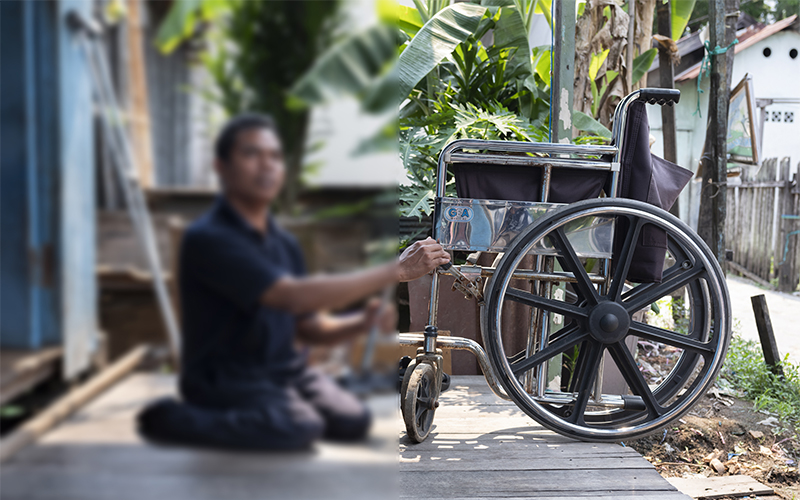
AT2030: Community led solutions. Assistive Technologies in Informal Settlements in Sierra Leone and Indonesia
Development Planning Unit (DPU)Aug. 19, 2020Case Studies and ReportsFind out more about the AT2030 sub-programme focusing on how disabled and older people in informal settlements in Banjarmasin (Indonesia) and Freetown (Sierra Leone) are able to achieve their aspirations, and the role that Assistive Technologies play in their strategies to do so.
-
Product Narrative: Eyeglasses
Mathilde Chaudron, Margaret Savage, Frederic Seghers, Clinton Health Access Initiative, Alison End Fineberg, Barbara Goedde, ATscale, Global Disability Innovation Hub, Vicki Austin, University College London, Catherine Holloway, Dr Ben Oldfrey, Priya Morjaria, Katherine PerryJuly 30, 2020GlobalCase Studies and ReportsProduct Narrative: Eyeglasses - A Market Landscape and Strategic Approach to Increasing Access to Eyeglasses in Low and Middle Income Countries.
-
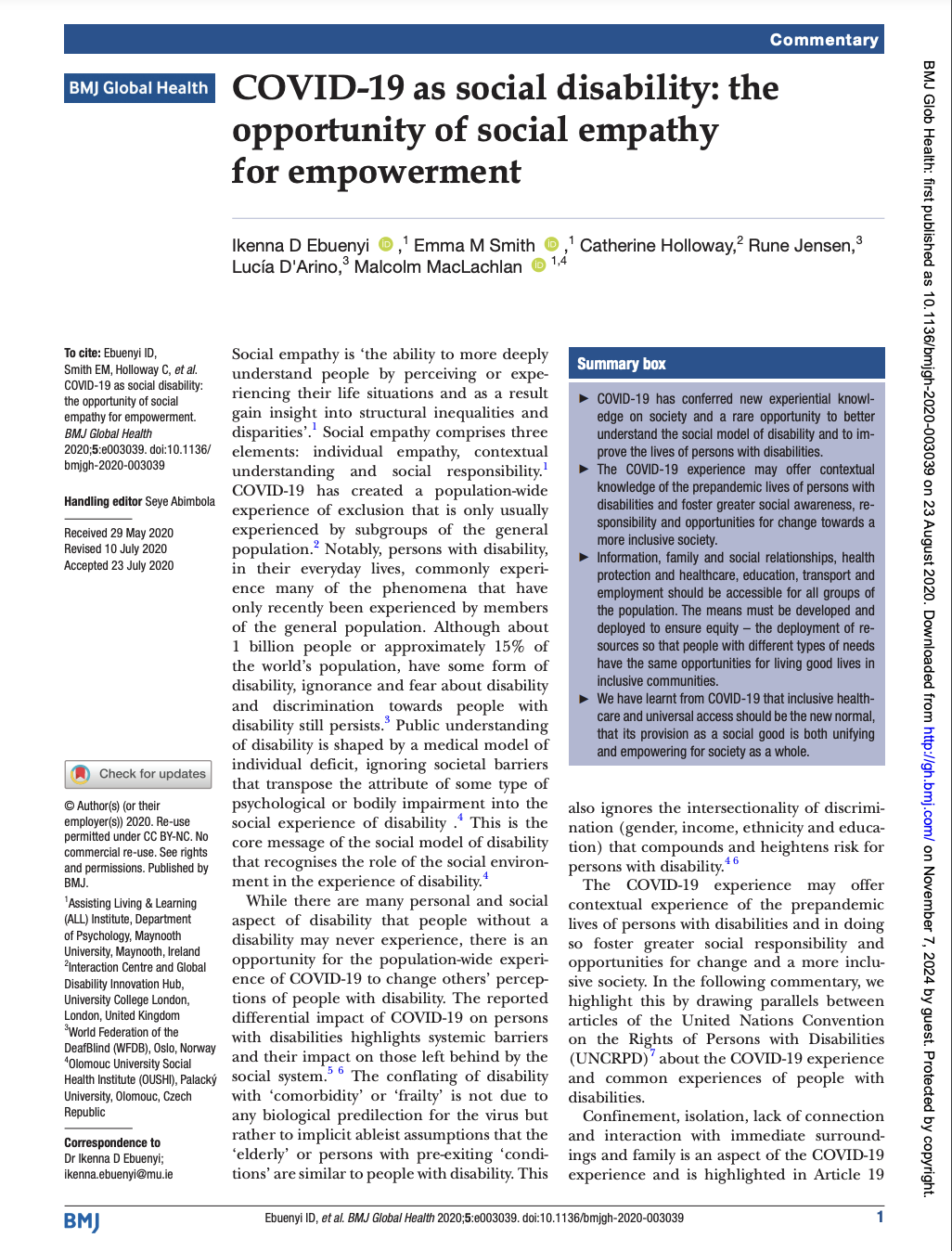
COVID-19 as social disability: the opportunity of social empathy for empowerment
Catherine Holloway, Malcolm MacLachlan, Emma M. Smith, Ikenna D. Ebuenyi, Rune Jenson, Lucía D'ArinoJuly 23, 2020Academic Research PublicationsA commentary from authors on COVID-19 as social disability
-
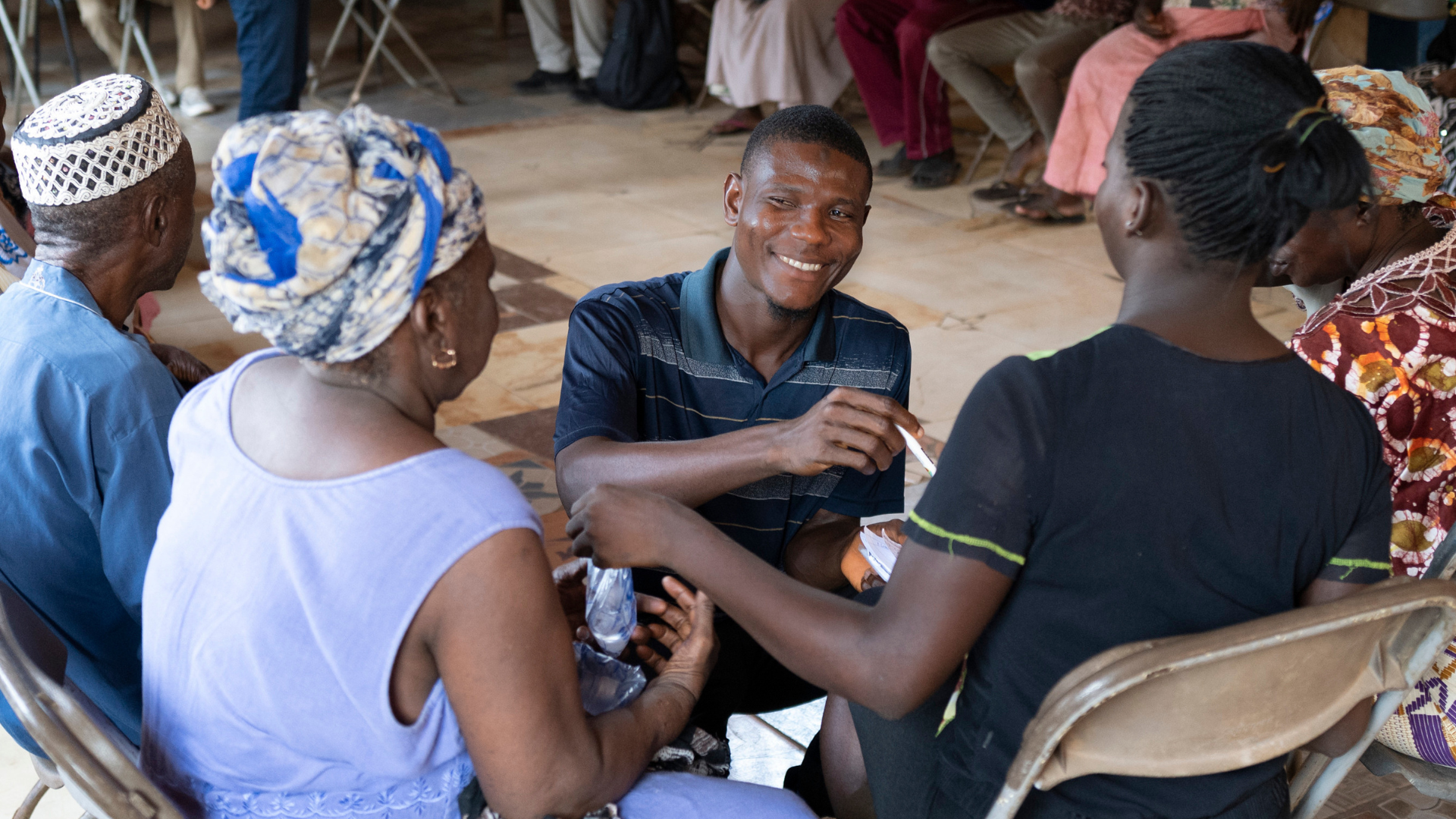
Selfsustainable Assistive & Accessible Technology for Low Resource Settings
Catherine Holloway, Dr Ben Oldfrey, Mark Miodownik, Nicolai MarquardtJuly 1, 2020GlobalAcademic Research PublicationsCHI 2020 Extended Abstracts, April 25–30, 2020, Honolulu, HI, USA. Selfsustainable Assistive & Accessible Technology for Low Resource Settings
-
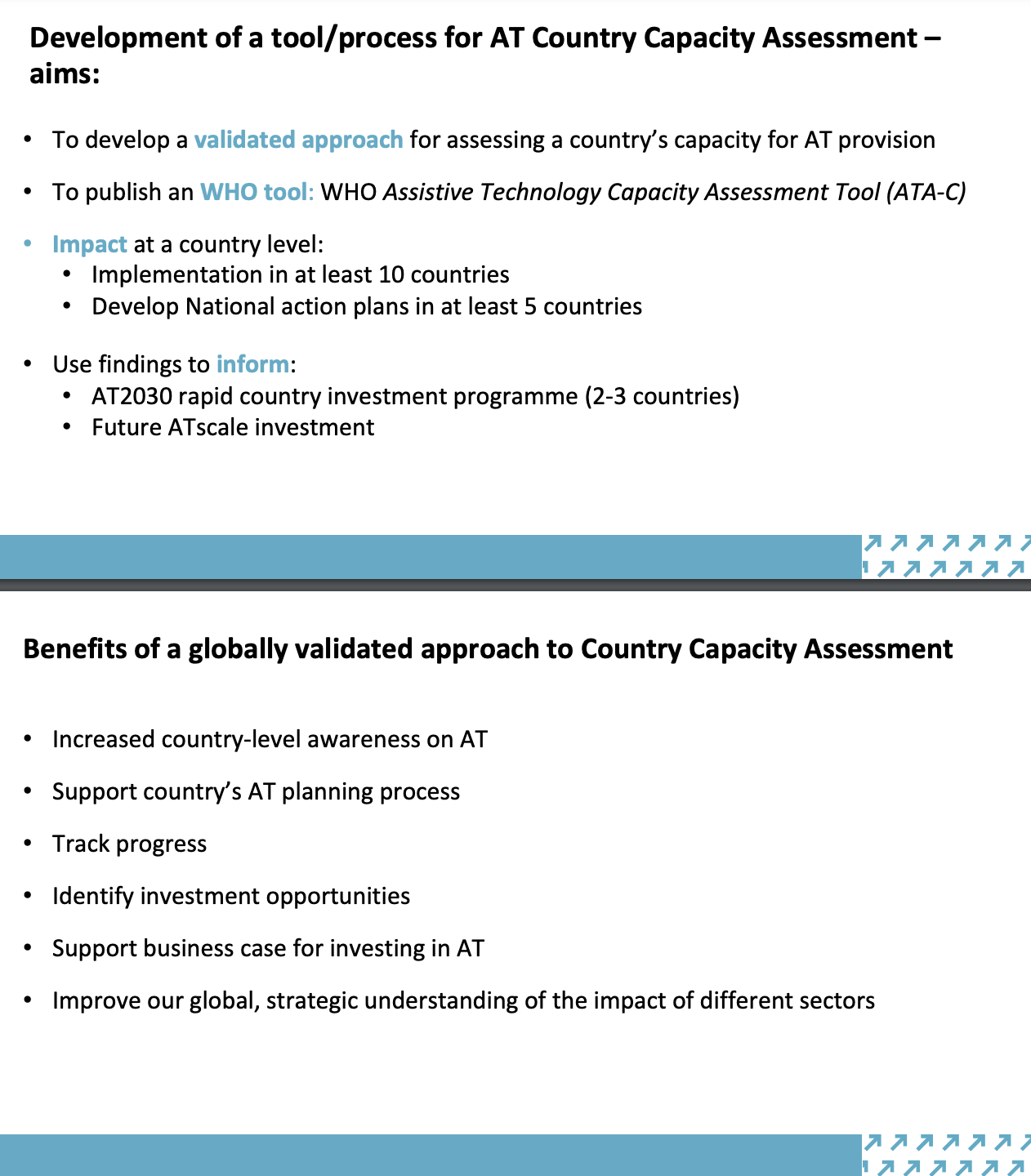
Development of a tool/process for AT Country Capacity Assessment
GATE, World Health OrganizationJune 15, 2020AT2030 ResourcesPresentation from WHO on ATA-C tool.
Previous PageNext Page